A Covid Baby Walks into a Supermarket. . .
My youngest grandchild is a Covid baby. That’s what one of the parents sitting near me during a recent musical performance called her son. Singing and clapping a la Kodàli, the children standing on risers in front of us were all born during the period we fondly know as “lockdown.” I’m sure that students of child development, as I once was, are all over the psychological outcomes of that reality, but I’ll leave my personal views on that matter for another day.
The significance of my granddaughter, known by her family as “B,” being born at that particular time in world history is this: during the lockdown caused by the Covid pandemic her father, my son, a work-at-home dad, began ordering groceries and other items to be delivered to their front door. He liked the convenience so much that he has continued the practice to this day.
The Bombshell
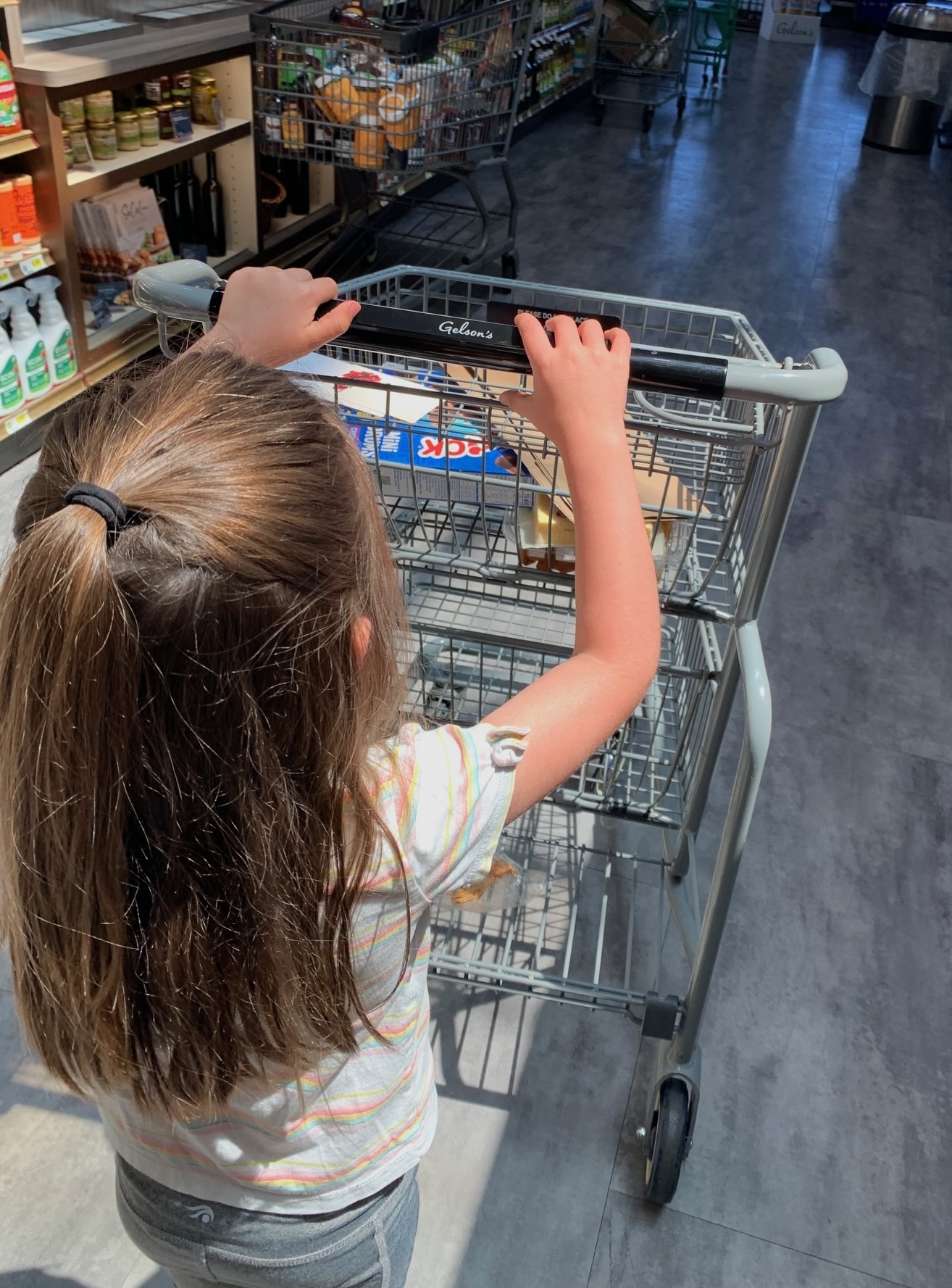
As four-year-old B and I walked toward the automatic opening doors at Gelson’s Market, she announced she had never been inside a grocery store.
“Never?” I asked.
“No, I’ve never been inside except when Mama gets coffee from Starbucks.”
“Surely someone has run in for a few groceries. . .”
“Nope. Can I sit in one of those seats?” (pointing at the grocery cart)
And so our adventure began.
My grocery list contained only three items:
- Lemons (so we could make lemonade)
- Campbells Chicken Noodle Soup (with Paw Patrol pasta shapes)
- Popcorn (for during the movie we planned to watch after dinner).
Thinking lemons, I began by steering the cart toward the Produce section.
“No, Grandma. Not that way!” B pointed toward the Flower section. “Can we buy some flowers for Mama?”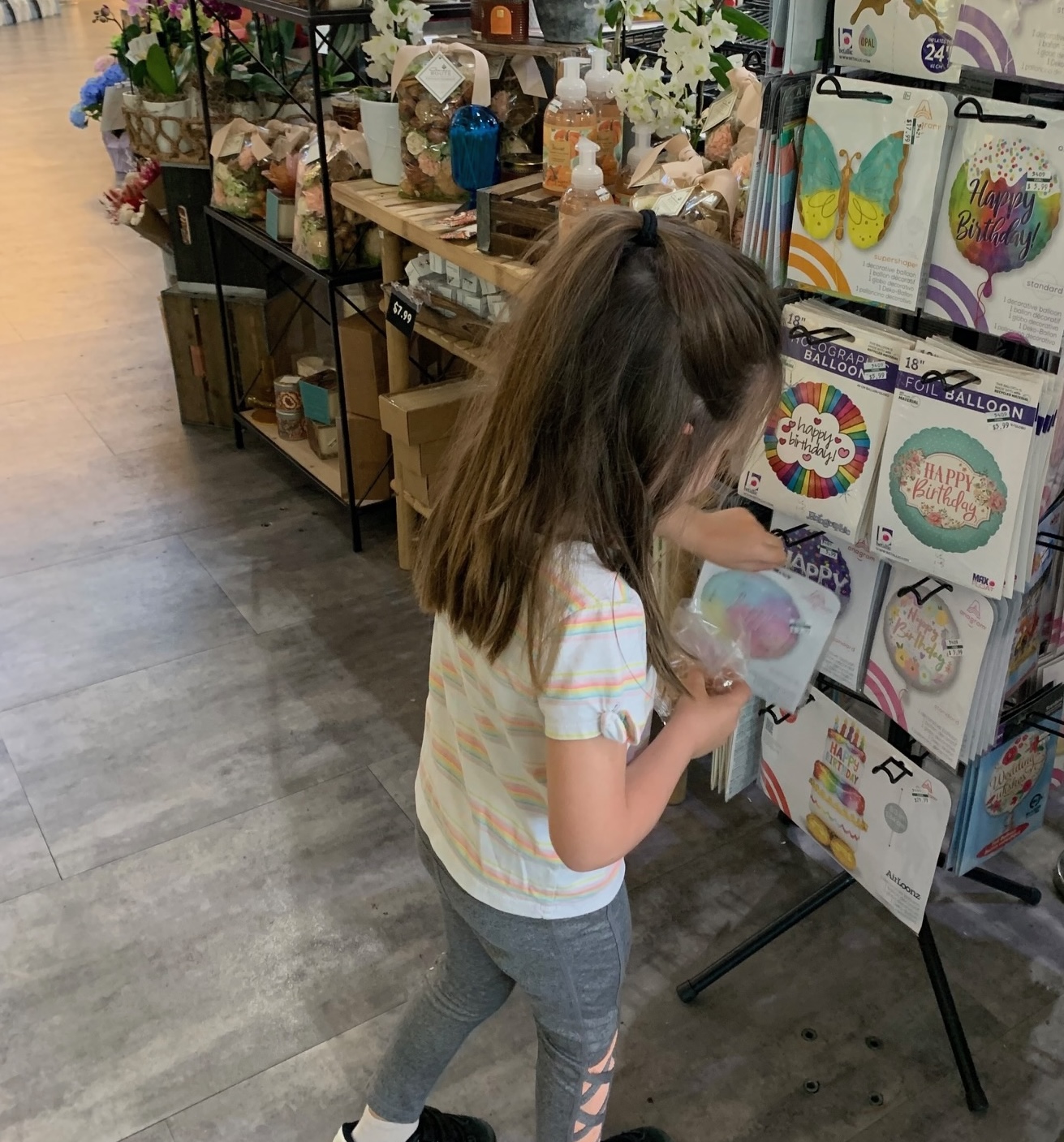
A discussion ensued during which I pointed out that flowers were expensive and we might think about getting some for Mother’s Day, which was still two weeks away, or Mama’s birthday, which was even further away. I prevailed, but only just.
I continued toward Produce, but B spoke up again — “There, Grandma, can we go over there?” An end-cap had caught her attention. Of course it had. That’s what end-caps do. I pushed the cart toward the display of crackers.
“Papa buys those,” she said, gesturing toward a familiar whole-grain cracker brand. “Can we get some, please?”
The crackers seemed relatively benign, and I knew we would eat them, so I agreed. I pushed the cart closer to the end of the aisle so B could reach for a box and drop it into the cart. She laughed with glee. “Thank you, Grandma! Let’s go down there now,” pointing to the cereal aisle. I complied.
The Exploration Begins
“Can I get out of the cart now?”
She scrambled down with a little help, and began examining the cereal boxes one by one.
Have you ever looked closely at the cereal boxes on offer in a grocery store? Or counted them?
According to AI, the average supermarket cereal aisle contains over 250 varieties of cereals. Larger stores can feature dozens of different unique options, ranging from sugary favorites to healthier, whole-grain choices. The sheer volume is designed to cater to diverse consumer tastes, featuring hundreds of distinct boxes in a single aisle.
And just imagine what this looks like to a four-year-old raised on oatmeal and generic cheerios. As B explored the aisle, box by box, I realized that I had just unbottled a genie. As she made her way along the shelves and exclaimed at the variety of choices, I tried to see the scene through her eyes. Brightly colored bowls filled with cereal topped with fresh fruit, swimming in delicious cold milk, often presented by imaginary creatures or anthropomorphic animals designed to appeal to children and foster nostalgia in adults.
And they worked. I hadn’t seriously shopped in a cereal aisle since my youngest child, now 40, had left home. But now I found myself remembering camping trips when we tore into variety packs of cereal each morning, or breakfasts at home singing “snap, crackle, and pop” with my mother. As we made our way at a snail’s pace down what was surely the longest aisle in the store, dozens of images appealed to my granddaughter and fostered nostalgia in me.
The remainder of our shopping trip progressed in much the same way. We went up or down every single aisle. B discovered a whole new world of products to buy (did I mention that she lives in a home without commercial television?) and at one point I regretted ever bringing her into the supermarket (What will I tell her father?).
When we left the store, however — over an hour later — we had only added a small number of items to our grocery cart that hadn’t been on the original list, and she had had a wonderful time. It was a lot cheaper than Disneyland, I told myself. B’s introduction to the world of food consumerism would have come about eventually, and fortunately it happened on a day when I had the time and the patience to explore along with her, and to explain such things as that blueberries and milk were not actually included inside the cereal box.
After dinner that evening we discovered that we had forgotten to buy popcorn. No matter — we enjoyed our movie with a bowl of Fruit Loops.
Marlene Anne Bumgarner writes primarily about food, family, and traditions. Her 2020 memoir, Back to the Land in Silicon Valley, is about raising children, animals, and vegetables on a rural plot of land in the 1970s. Organic Cooking for (not-so-organic) Families will be out soon, and she’s working on an update to The Book of Whole Grains while also crafting a cozy mystery, Death on a Sunny Afternoon – a Harriet Palmer Mystery.
Share this post





The last line made me laugh so hard! Love how you captured the world through her eyes. Thanks!
Gaby
Gaby,
Laughter is always good. I’m delighted that you got the joke!
Marlene
What a delightful journey! Seeing the familiar with new pair of eyes! You made a large grocery store into a jungle packed with color, shapes, letters, a hidden dangers. I could see it all, laughing at your restraint, borrowing her fresh eyes.
Nancy,
I’m so glad that I was able to bring you with us on our exploration! And so good to hear from you.
Marlene